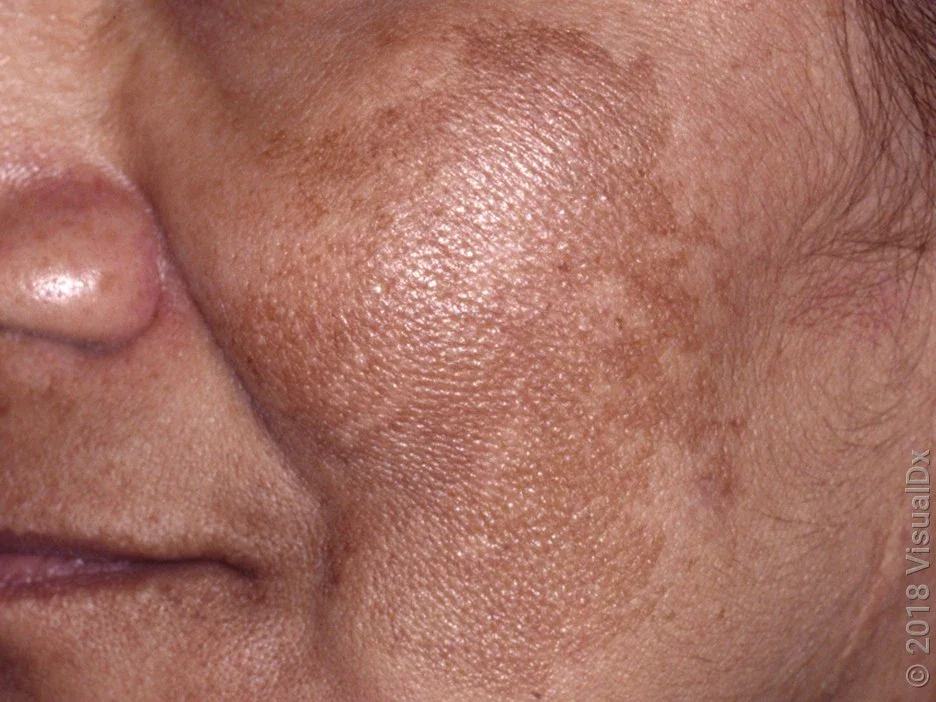
Melasma is a common skin condition. It causes dark patches to appear on the face. These patches are usually brown or gray-brown. They often show up on the cheeks, forehead, nose, and chin.

Credit: www.cutislaserclinics.com
How Does Melasma Look?
The dark spots of melasma are usually flat. They do not hurt or itch. The patches are different sizes and shapes. Sometimes they look like a mask on the face. That is why people call it the “mask of pregnancy” when it appears during pregnancy.
Who Gets Melasma?
Melasma can affect anyone. But it is more common in women. Especially women who are pregnant or using birth control pills. It also happens more in people with darker skin.
People who spend a lot of time in the sun can get melasma too. Sunlight makes the dark patches worse.
What Causes Melasma?
Melasma happens when the skin makes too much pigment. Pigment is what gives skin its color. When the skin makes too much, dark spots appear.
Several things can cause melasma:
- Sun exposure
- Hormone changes, like during pregnancy
- Using certain medicines, such as birth control pills
- Some cosmetics or skin care products
- Genetics – it can run in families
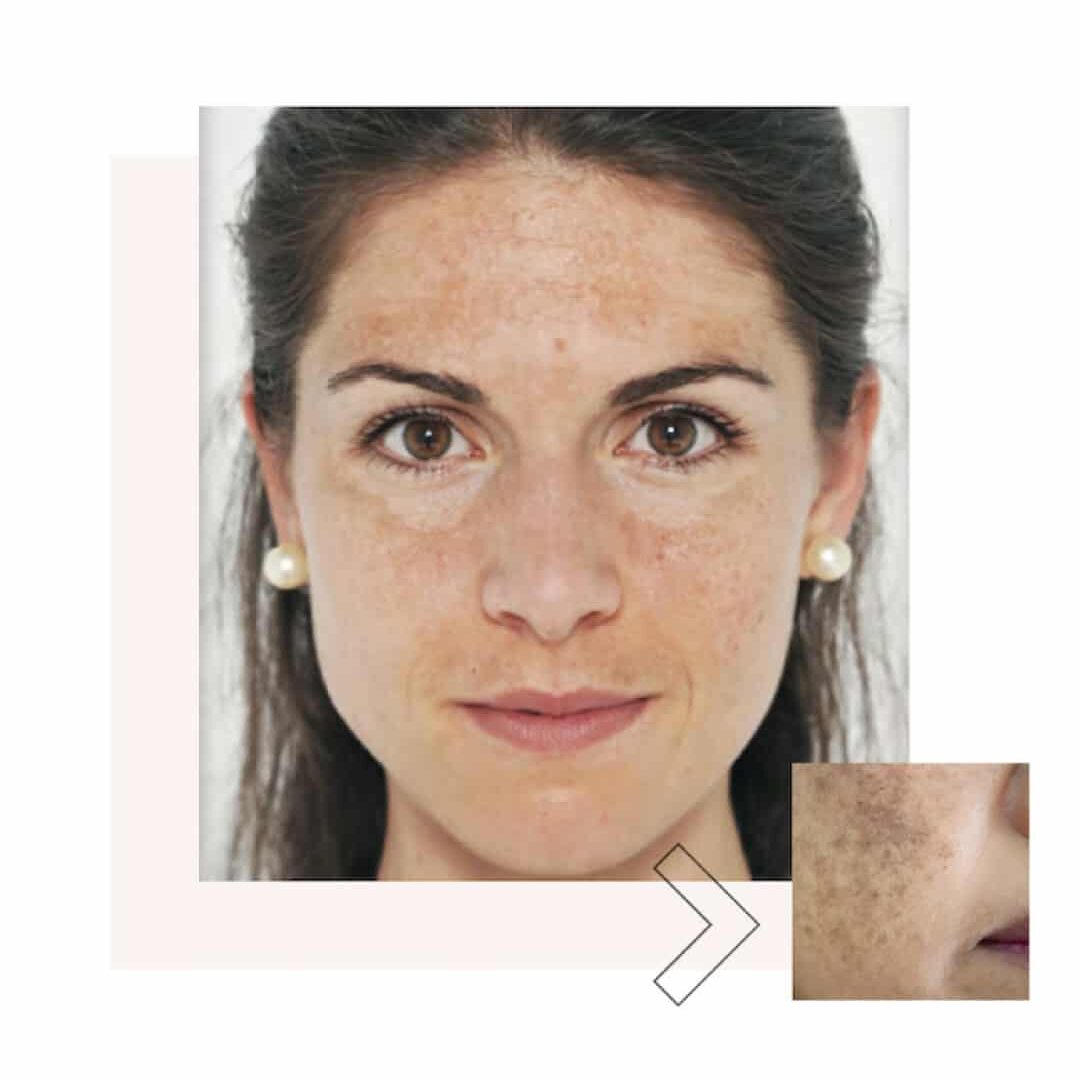
Credit: facialaestheticsinc.com
Where Does Melasma Usually Appear?
The most common areas are:
| Area | Description |
|---|---|
| Cheeks | Dark patches on both sides of the face |
| Forehead | Brown spots across the forehead |
| Nose | Spots on or around the nose |
| Chin | Dark areas on the chin |
Is Melasma Dangerous?
No. Melasma is not harmful. It does not cause pain or illness. But many people want to treat it. They want their skin to look even and clear.
How to Treat Melasma
There are many ways to manage melasma. Some treatments help lighten the dark spots. Others prevent new spots from forming.
Here are common treatment options:
- Sun Protection: Use sunscreen every day. Wear hats and sunglasses.
- Topical Creams: Doctors may give creams with ingredients like hydroquinone. These creams reduce pigment.
- Chemical Peels: Special acids remove the top skin layer. This helps lighten spots.
- Laser Therapy: Lasers target dark patches. But this treatment may not work for everyone.
How to Protect Your Skin from Melasma
Prevention is important. You can reduce the chance of melasma. Follow these tips:
- Always wear sunscreen with at least SPF 30.
- Use sunscreen even on cloudy days.
- Wear wide-brimmed hats when outside.
- Stay in the shade when possible.
- Avoid tanning beds.
- Talk to your doctor before using hormone medicines.
What Should You Do If You Have Melasma?
If you notice dark patches on your face, do not worry. Many people have melasma. But it is good to see a doctor or skin expert. They can confirm the diagnosis. They can also suggest the best treatment for you.
Do not try harsh skin treatments without advice. Some products can make melasma worse.
Melasma and Pregnancy
Many pregnant women get melasma. Hormone changes cause this. It is called “chloasma” during pregnancy. Usually, the dark patches fade after the baby is born. But sometimes they stay longer.
Pregnant women should protect their skin well. Use safe sunscreens and avoid strong skin products.
Common Myths About Melasma
There are many wrong ideas about melasma. Here are facts to know:
- Myth: Melasma is a sign of poor health.
Fact: Melasma is a skin condition only. It does not mean you are sick. - Myth: You can cure melasma quickly.
Fact: Melasma may take time to improve. Sometimes it comes back. - Myth: Only women get melasma.
Fact: Men can get melasma too, but it is less common.
Summary
Melasma causes dark patches on the face. It happens from too much pigment. Sun exposure and hormones are main causes. Melasma is not dangerous but can affect looks.
Treatments are available to lighten spots. The best way is to protect skin from the sun. See a doctor to get correct care. With patience, melasma can improve over time.
Frequently Asked Questions
What Causes Melasma On The Face?
Melasma is caused by sun exposure, hormonal changes, and skin inflammation.
Who Is Most Likely To Get Melasma?
Women, especially pregnant or taking birth control, are most likely to get melasma.
Can Melasma Appear On Other Body Parts?
Yes, melasma can also appear on the neck and forearms.
How Can I Prevent Melasma From Getting Worse?
Use sunscreen daily and avoid direct sunlight to prevent melasma worsening.