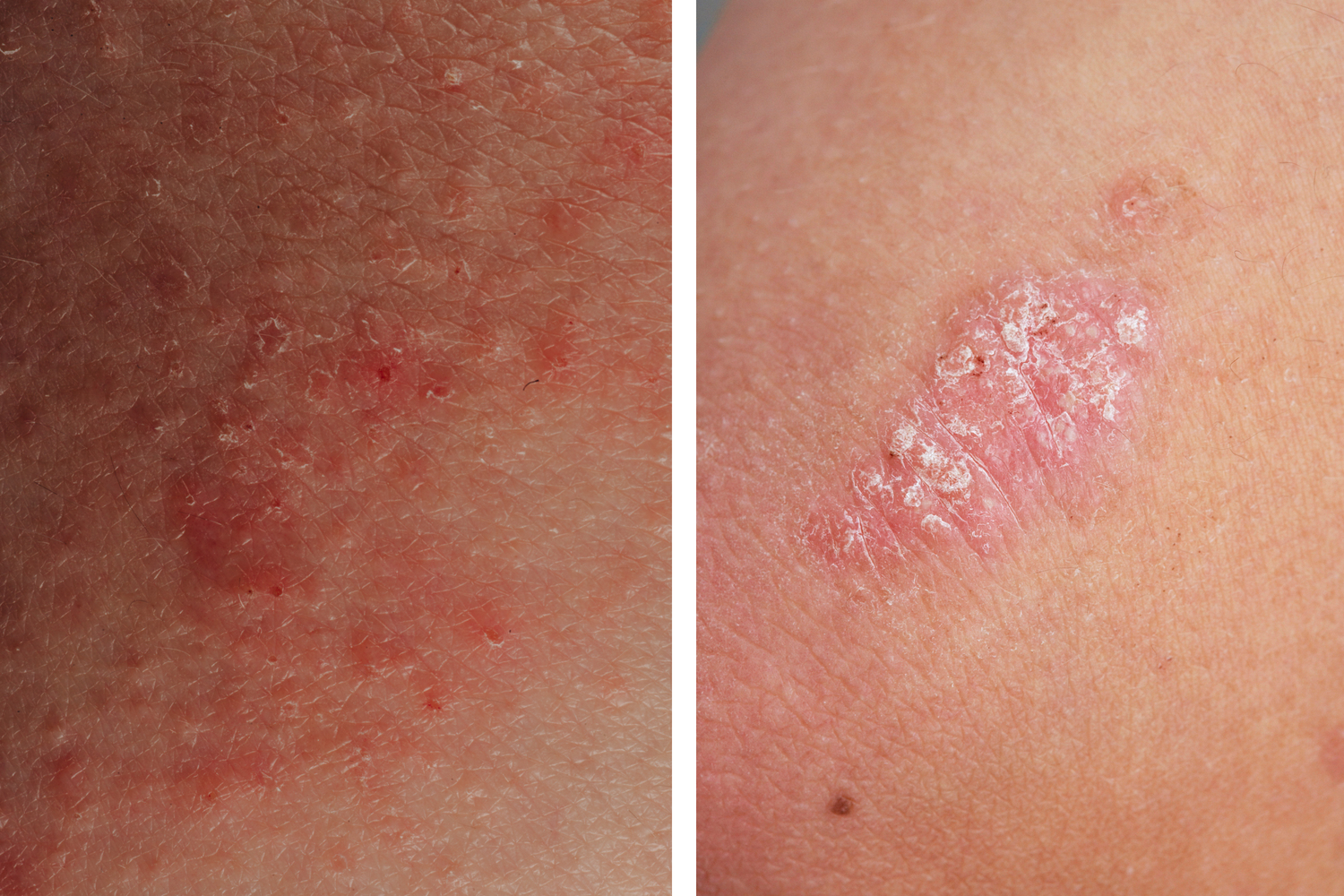
Many people get confused about the words psoriasis, eczema, and dermatitis. These words sound similar. They all are skin problems. But they are not the same. In this article, you will learn what makes them different.

Credit: dermeleve.com
Understanding the Basics
First, let’s look at what each word means in simple terms.
- Psoriasis is a skin condition that causes red, scaly patches.
- Eczema means the skin is red, itchy, and inflamed.
- Dermatitis is a general word for skin inflammation. It includes many types of skin rashes.
So, dermatitis is a broad word. Eczema is a kind of dermatitis. Psoriasis is different, but it can look like eczema or dermatitis sometimes.
What Is Psoriasis?
Psoriasis is a long-lasting skin disease. It happens because the skin cells grow too fast. Normally, skin cells grow and shed slowly. In psoriasis, this cycle speeds up. The skin gets thick and red.
Psoriasis patches are covered with white or silver scales. The patches can be very itchy or painful. Sometimes, they crack and bleed.
Common Signs Of Psoriasis
- Red patches with thick white scales
- Dry, cracked skin that may bleed
- Itching or burning feelings
- Often appears on elbows, knees, and scalp
What Causes Psoriasis?
Psoriasis is caused by problems in the immune system. The immune system attacks healthy skin cells by mistake. This causes skin cells to grow too fast.
It is not contagious. You cannot catch psoriasis from someone else.
Psoriasis may run in families. Stress, cold weather, infections, or certain medicines can make it worse.
What Is Eczema?
Eczema is a condition that makes the skin red, itchy, and inflamed. It is very common, especially in children.
Eczema can make the skin dry and cracked. The skin may feel rough and sore. Sometimes, small blisters appear.
Common Signs Of Eczema
- Red, dry, and itchy skin
- Skin cracks and may bleed
- Small blisters that may ooze
- Often found on face, hands, and behind knees
What Causes Eczema?
Eczema happens when the skin’s barrier is weak. This lets irritants and allergens in. The skin reacts by becoming inflamed and itchy.
It often starts in childhood. Some people outgrow it; others keep it for life.
Common triggers include soaps, detergents, pollen, pet dander, and certain foods.
:max_bytes(150000):strip_icc()/eczemavpsoriasisdark2-6f1d67dd95484ad5b2c7797317a1532b.png)
Credit: www.health.com
What Is Dermatitis?
Dermatitis means skin inflammation. It is a general term. Many skin problems cause dermatitis.
There are different types of dermatitis. The most common are:
- Atopic dermatitis – a type of eczema
- Contact dermatitis – caused by touching irritants or allergens
- Seborrheic dermatitis – causes flaky, oily patches, often on scalp
Common Signs Of Dermatitis
- Red, swollen skin
- Itching or burning
- Dry, cracked, or scaly skin
- Blisters or oozing in some cases
What Causes Dermatitis?
Causes vary by type. Contact dermatitis happens after touching something harmful. Seborrheic dermatitis is linked to oily skin and yeast on skin. Atopic dermatitis is caused by genetics and environment.
How to Tell Them Apart?
It can be hard to know the difference. The skin problems look alike. But some clues help.
| Feature | Psoriasis | Eczema | Dermatitis |
|---|---|---|---|
| Cause | Immune system overactivity | Skin barrier weakness | Varies by type |
| Appearance | Red patches with thick silver scales | Red, dry, itchy skin, sometimes blistered | Red, swollen, itchy skin |
| Common areas | Elbows, knees, scalp | Face, hands, behind knees | Depends on type, often hands or scalp |
| Itching | Often mild to moderate | Often severe | Varies |
| Chronic or temporary? | Chronic (long-term) | Often chronic | Varies |
How Are They Treated?
Treatment depends on the condition. Let’s look at common ways to help each.
Treating Psoriasis
- Use special creams with steroids or vitamin D
- Light therapy (UV light) can help
- Medicines that calm the immune system
- Keep skin moisturized
Treating Eczema
- Use moisturizers to keep skin soft
- Apply steroid creams to reduce inflammation
- Avoid triggers like soaps and allergens
- Sometimes use medicines to reduce itching
Treating Dermatitis
Treatment depends on the type of dermatitis.
- Contact dermatitis: Avoid the cause. Use creams to heal skin.
- Seborrheic dermatitis: Use medicated shampoos or creams.
- Atopic dermatitis: Treat like eczema with moisturizers and creams.
Why Is It Important to Know the Difference?
Getting the right diagnosis helps you get the right treatment. Using wrong creams or medicines can make the skin worse.
If your skin is red, itchy, or scaly, see a doctor. They can tell if it is psoriasis, eczema, or dermatitis. They may do tests or ask about your family history.
Summary
Psoriasis, eczema, and dermatitis all cause skin problems. But they are not the same. Psoriasis is an immune system disease with thick scales. Eczema is dry, itchy skin from weak skin barriers. Dermatitis means skin inflammation and includes many types.
Knowing the difference helps you care for your skin better. Always ask a doctor if you are not sure.
Healthy skin is important. Take care of it by keeping it clean, moisturized, and protected from harm.
Frequently Asked Questions
What Are The Main Symptoms Of Psoriasis, Eczema, And Dermatitis?
Psoriasis causes thick, scaly patches; eczema leads to dry, itchy skin; dermatitis shows red, inflamed areas.
How Can I Tell Psoriasis Apart From Eczema?
Psoriasis has silvery scales and thick skin; eczema is usually red, dry, and itchy without scales.
Is Dermatitis The Same As Eczema?
No, dermatitis is a type of skin inflammation; eczema is a broader term for skin irritation.
What Triggers Psoriasis Compared To Eczema?
Psoriasis triggers include stress and infections; eczema triggers often involve allergens and irritants.